
PRACTICAL RESOURCES
When a child tells you about bullying
For parents, caregivers and teachers
Bullying involves repeated harm and an imbalance of power. A child who speaks up needs a calm response and practical support.
Start with the child
- Listen without blaming them.
- Thank them for telling you and make clear the bullying is not their fault.
- Ask about what happened and what would help them feel safer.
- Contact the school and discuss its response to bullying.
Keep the conversation open
Check in after reporting the concern. Ask whether the behaviour has stopped and whether the child feels safe at school and online. Support involves more than one conversation.
If your child has bullied someone else, address the behaviour without treating them as a bad person. Work with the school on non-violent consequences, empathy and ways to make amends.
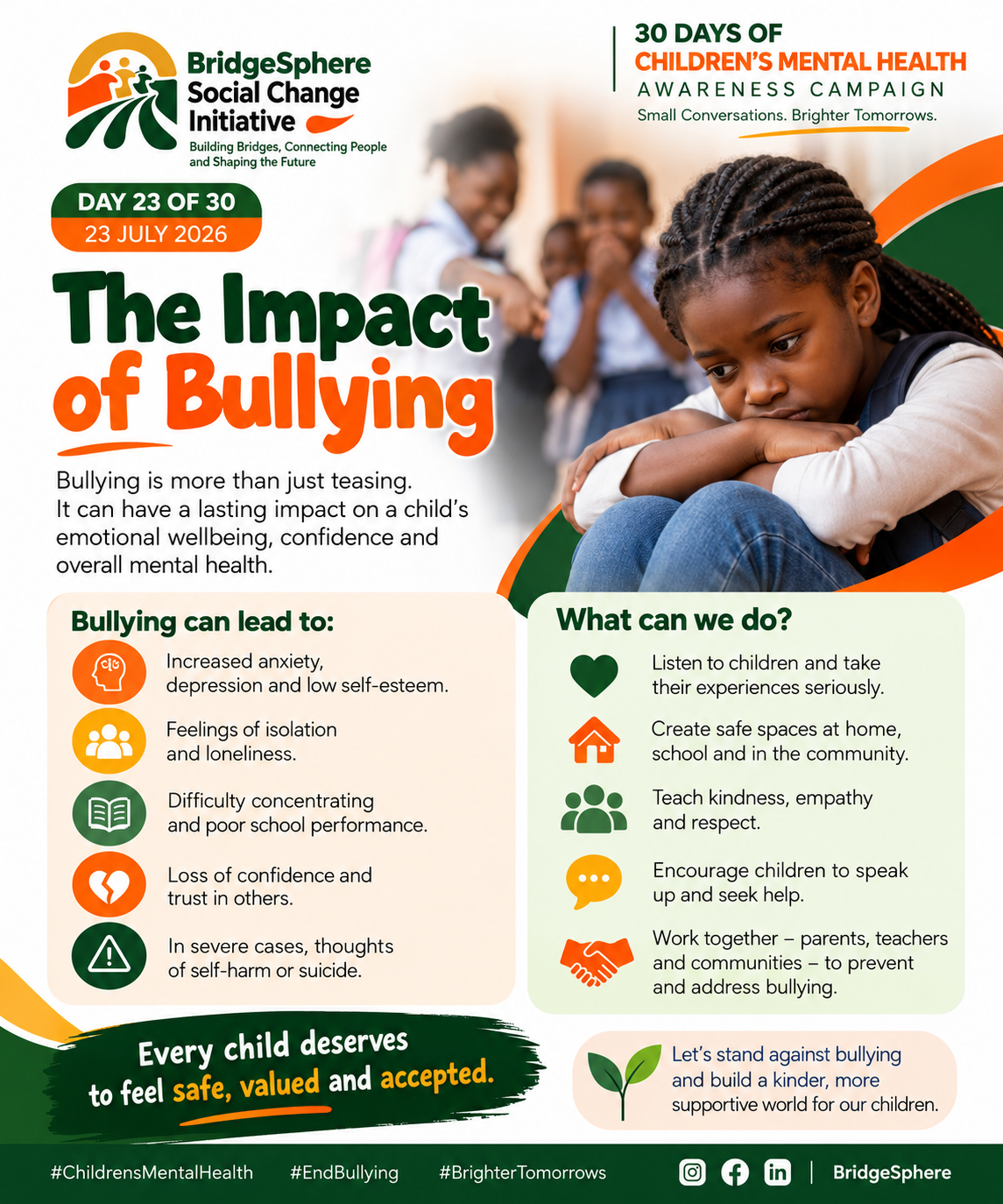
Related campaign flyer
Read Day 23: The impact of bullying ↗
Further reading
UNICEF: Bullying, what it is and how to stop it ↗
Source checked 22 October 2026. Educational information, not individual assessment or treatment. For ongoing concerns, speak with an appropriately qualified professional.